Updated 2/18/26
Credit unions face many unique challenges. CUs must compete with larger financial institutions while maintaining their community-focused values. Digital marketing offers a solution. It allows credit unions to reach their members and potential members in a highly targeted and efficient manner. While maintaining compliance!
We’ll briefly explore digital marketing for credit unions. It provides actionable strategies to enhance online presence, attract new members, and retain existing ones. From SEO and social media to content creation and data analytics, each section offers practical tips and insights tailored to credit unions’ needs. Whether you’re a credit union marketing professional or a C-suite decision-maker within a credit union, this will help you get your bearings.
Understanding Digital Marketing for Credit Unions
Digital marketing is a powerful tool for credit unions. It’s more than just having a website or a social media presence. It’s about leveraging online platforms to connect with members and gain new ones. Digital marketing is unlike traditional marketing channels (e.g. radio, print, etc.) because of the data that can be gained and used to better understand the needs and preferences of the people you are messaging. You can reach people where they are and tailor messaging to their unique behaviors and the solutions they seek. With digital marketing and analytics, credit unions can make data-driven decisions to optimize digital/non-digital campaigns and even inform decisions impacting physical branches.
What Are Current Trends in Credit Union Digital Marketing?
Credit unions can’t simply know about trends, they’ve got to do something about them. Some things to keep an eye on:
- Agentic AI and Hyper-Personalization: this could offer CUs the opportunity to analyze a member’s transaction patterns and offer loan or savings products.
- Generative Engine Optimization (GEO): as more people use AI to get answers and search engines like Google embed AI overviews into SERPs (search engine results pages), it’s more important for CUs to create SEO and AI optimized content to get mentioned.
- SEO (search engine optimization): SEO has not died…at all. It’s evolving as it has over the decades. Credit unions need to create and amplify content that provides value to members and non-members.
- Social media as a member service and new-member acquisition tool: this is an opportunity for CUs to showcase what they can offer members, showcase member success stories, offer financial tools and services. Doing this will create opportunities to acquire new members, too.
- Frictionless account openings and loan application submission: it’s no secret that credit unions can, in some situations, lag behind their bank counterparts when it comes to making account opening and loan application submissions easy. Companies like Clutch can change all that for CUs.
- Financial literacy: instead of shouting about rates from a bullhorn, CUs should offer solutions that meet a person’s needs at their stage in life. For example, when a person starts saving for a down payment on a car or begins researching cars and car loans, offer a car buyer’s guide.
- Migration of Marketing Budget to Streaming: in this case streaming includes CTV/OTT and audio. More CU marketing decision-makers are shifting budgets away from billboards and radio ads to highly targeted CTV/OTT and streaming audio campaigns.
- Advance Beyond Table Stakes: this builds off #5. CUs take up display ad space, ad budgets, and overall resources to promote simple stuff like direct deposit, mobile apps, and mobile deposits. It’s akin to a car maker promoting its cars having steering wheels. For some time, consumers understood there would be a tech trade-off when choosing a credit union for its rates. We’re past that.
Let’s explore a couple topics a bit more.
SEO: Increasing Online Visibility for Credit Unions
Search engine optimization (SEO) is a powerful marketing tool for credit unions to increase their online visibility, get more traffic to the site, acquire members, and increase the loan portfolio. Organic search is still a significant traffic driver and will deliver one of the best, if not the best, ROI of any marketing channel. SEO has so many aspects which includes competitive analysis, keyword research, content creation and amplification of that content. It’s very technical, but, it’s not the black arts. We won’t get into the details here because of the technical aspects, but here are some quick hits any CU can do:
- Product pages: review the content on your auto loan, mortgage, home equity, checking, savings, etc. pages and beef it up where necessary. Your content should answer the basic questions like what an auto loan is, why your CU offers the best auto loans, and how to apply.
- Blog: start small, build momentum, and grow. You can start with one or two blog posts a month. It’s not going to cause a tidal wave of traffic, but it’s a start. Use GA4 to track how much traffic the content is pulling in, how the content contributes to objectives, and share with your team. Over time, the momentum should help you get more resources to create more content.
- Backlinks: get links back to your site from local Chambers of Commerce, charity partners, SEGs, etc. Focus on quality over quantity and don’t sign up for link-building services. They cause more harm than good.
- Amplify: amplify your content through social posts, emails, etc. It all helps build traffic. Also, consider doing press releases.
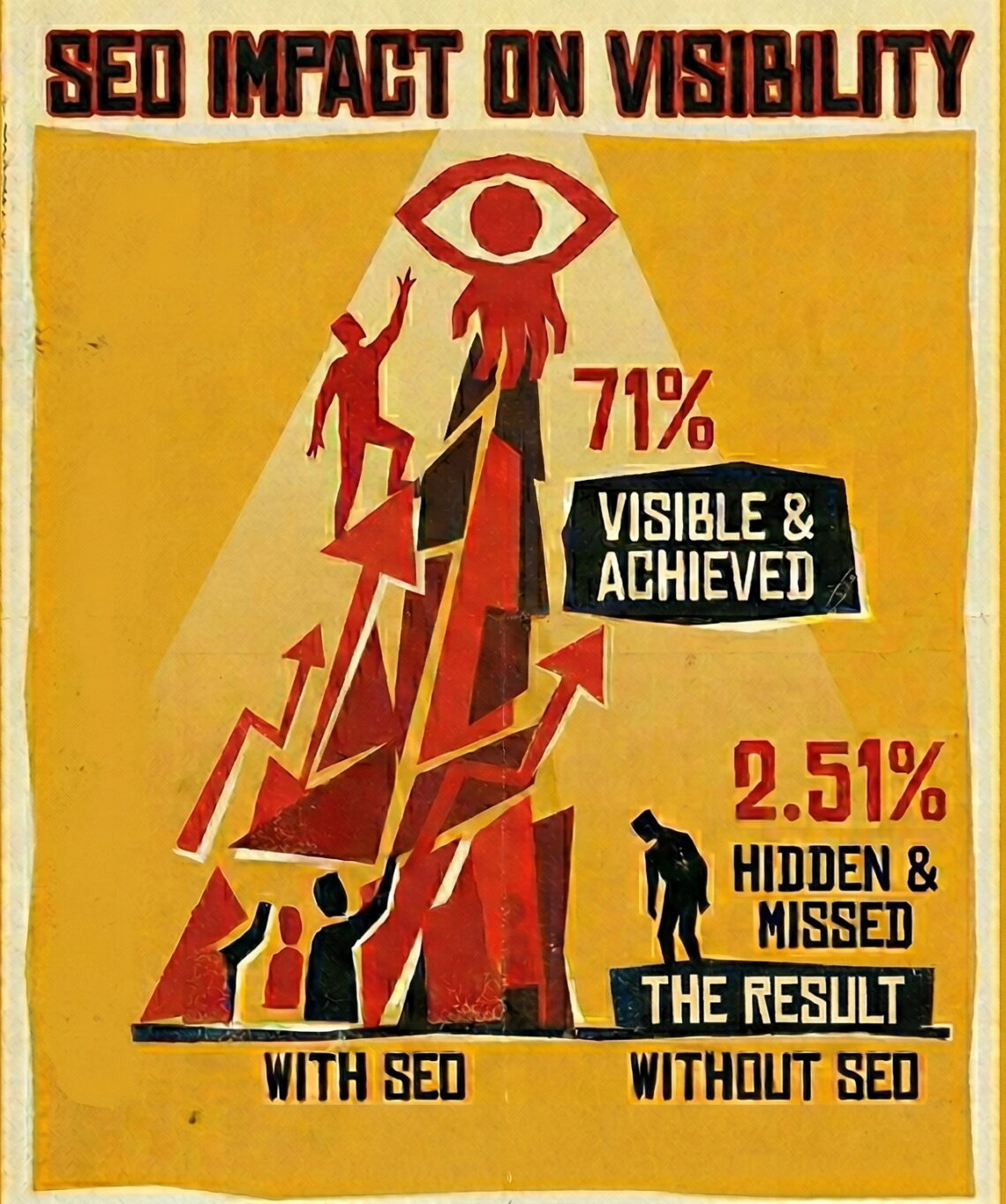
Recently, we analyzed 5 years of traffic data across a sample size of 53 client CUs spanning assets of $250m to $9b. Here are some key takeaways:
- Credit union clients who pursued a strategic SEO campaign either with our help or purely in-house experienced an average annual growth rate of 71%.
- Credit union clients who did not pursue SEO experienced an average annual growth rate of 2.51%.
- Credit union clients with well-developed online and offline marketing strategies experienced organic search contribution to total traffic in the range of 30% – 37%.
- This applied to CUs across the asset spectrum stated above. They had multiple streams of traffic coming into the site, including social, paid search, referrals, video, paid social, and display. A common characteristic of CUs with a much higher percentage of organic search relative to total traffic is that there was less traffic diversity and less effort put toward building multiple traffic streams.
- The average conversion rate (conversion in this case is a successful application submission) across all 53 credit unions was 2.51%.
Local SEO Tactics
Local SEO is important for credit unions to attract new members and provide solutions for existing members. When you analyze your organic search queries, you’ll likely find queries for financial products/services that are “near” them or include a geographical modifier.
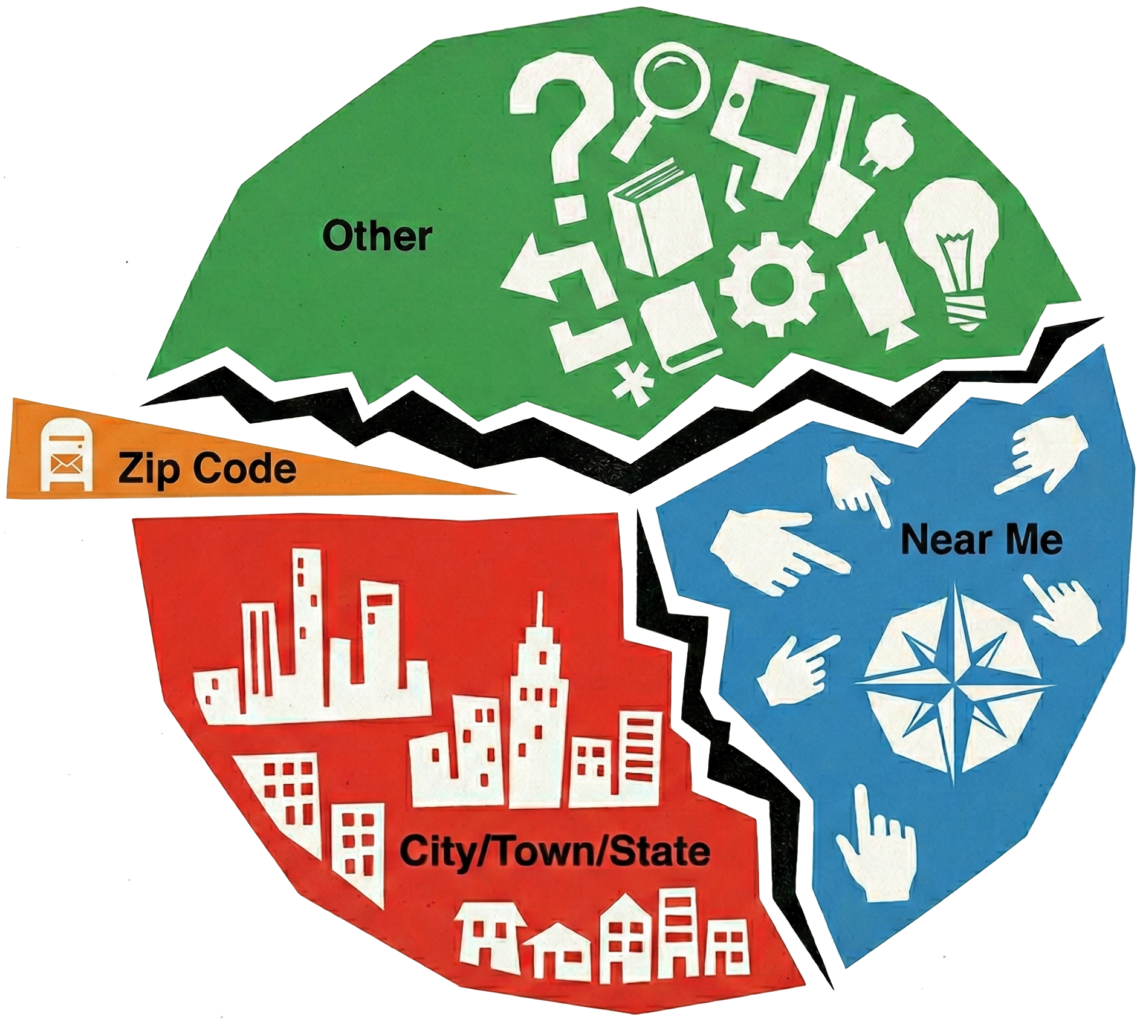
Remember the 53 CUs mentioned earlier? We analyzed the top queries by impressions for each one over a 12-month period. Because Google Search Console maxes out at 1,000 queries, we decided to pull data on a monthly basis and de-dupe the queries so we have a larger data set. This netted over 700,000 unique queries, and here’s a summary of what we found:
- 15.51% of total queries contained “near me”, city, state, town name, zip code or other query that indicates intent for a physical touchpoint
- “Near me” queries made up 4.93% of total queries, 3.88% of total impressions, but less than 1% of total clicks. Users may find the info they need directly from the search results page.
- City, town, state queries made up 6.76% of total queries, 1.78% of total impressions, and 1.39% of total clicks
- Zip code queries made upr 0.11% of total queries, 0.01% of total impressions, and 0.002% of total clicks.
- Other geographical queries made up 3.71% of total queries, 0.46% of total impressions, and 0.47% of total clicks.
- Terms that fit in this bucket include queries containing the credit union’s name and modifiers like “location”, “address”, “atm”
- No queries included county name
What can a credit union do to improve local SEO?
- Create localized content: that can include the basics like optimizing content for specific locations. Also, create content that promotes your SEG partners, charities, etc. Talk about local events like festivals, parades, etc. Align your CU with local events, businesses, organizations, etc., and you’ll be seen by the search engines as a local authority.
- Business Listings: claim and optimize your local listings on Google Business Profile, Yelp, Facebook, Apple’s Business Connect, Instagram, Foursquare, etc.
- NAP: building consistent local citations on your organization’s name, address, and phone (“NAP”). Consistency is key.
- Reviews: it’s easy to say “maintain strong ratings and review”, but, it doesn’t happen on its own. You have to be intentional about asking for reviews from happy members and addressing negative reviews. Stronger ratings/reviews have an impact on how you’re shown in localized queries and in AI.
- Schema markup: your CMS may already have schema built in and may simply need to be activated. If it’s not built in, reference the Schema site for the necesssary code. While relatively simple to use, a developer may be required to properly implement schema markup. Utilize the following markups:
- LocalBusiness: used for specific locations of bank branches, restaurant chains, medical practices, etc.
- BankorCreditUnion: this seems self-explanatory
- FinancialProduct: financial products provided to consumers and businesses by financial institutions
- Event: events happening at a certain time/place