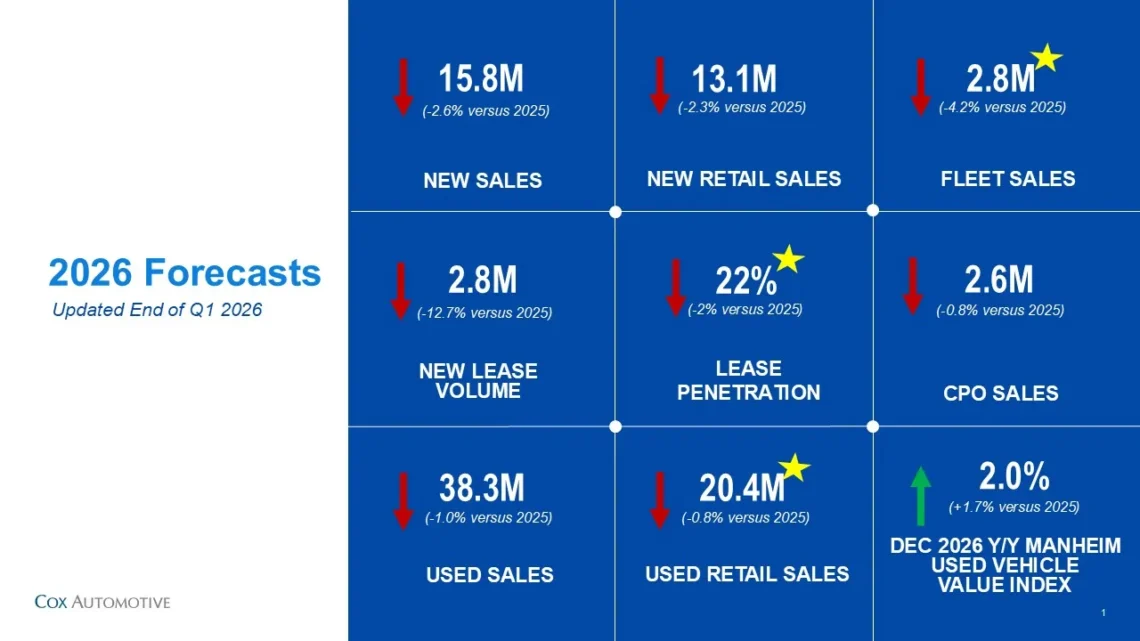
Looking at the rest of the year, auto industry analysts point to slightly lower, but still healthy auto sales market. 2025 ended stronger than expected, and major forecasters like Cox Automotive project the following for the remainder of 2026 (as of 3/26/26):
- New car sales: 15.8M (-2.6% vs. 2025)
- New retail sales: 13.1M (-2.3% vs. 2025)
- Used car sales: 38.3M (-1% vs. 2025)
- Used retail sales: 20.4M (-0.8% vs. 2025)
What are the drivers of 2026 auto sales forecast?
Many factors are driving the above sales forecast for the auto industry, including:
- Affordability: with the average price of a new car hovering around $50,000 and auto loan rates remaining high, the gap between high and middle -income households is widening and budget-minded car buyers are looking toward used cars.
- End of EV Tax Credits: federal EV tax credits came to an end in late 2025 and caused EV sales to start 2026 on the slow end of the scale. Without government incentives, EV makers are discounting inventory to keep unit sales moving.
- Geopolitics and Tariffs: As Middle East tensions impact gas prices, and fluctuating trade policies are leading to lower consumer confidence and sidelining many households from making big-ticket purchases.
What are some trends to watch in the 2026 auto industry?
- Hybrids: hybrids and plug-in hybrids are poised for big growth in 2026, and Q1 supports that outlook. In Q1 ’26, Hyundai hybrids grew 61%. Toyota reported 25% of new car sales being hybrid. Ford and Honda also reported strong hybrid sales.
- Automaker dominance: Toyota is challenging GM for #1 in U.S. sales with a hybrid-dominant lineup. Ford and Hyundai are vying for third place.
- Used cars as a safe haven: because of the high averagae new car price, demand for used cars remains high. Off-lease cars, including off-lease EVs, create an inventory of budget-friendly options for used car shoppers.
- Inventory and incentives: due to slower sales this year, inventory on dealer lots is creeping up. Automakers and individual dealers are offering higher incentives to move inventory that is sitting on lots longer than anticipated. Aggressive buyers can negotiate for better vehicle pricing on aging inventory.
How can credit unions and financial institutions drive auto loan growth in 2026?
Here are some ideas on how credit unions and FIs can adapt to meet consumers where their budgets actually are:
- The monthly payment issue: longer terms (e.g. 72 or 84 months) can make monthly payments more affordable.
- Capitalize on used-car inventory: actively target used-car shoppers and budget-conscious buyers with used-car financing options. Frictionless, online pre-approvals can give CUs an edge over dealership captive financing.
- Leverage data to recapture or refinance: credit unions can mine members’ transaction data to identify monthly payments going to competitors like Chase, Capital One, Ally, or a dealer’s captive lender. Also, use online data to identify car buyers over the past year or two and deliver targeted online messages to offer refinancing options to help them save money. CUs who position themselves as financial partners should do better than FIs that are seen merely as lenders.